
The reference library
for IBC tote buyers
Plain reference pages on how grades work, what the marking plate means, what cleaning can remove and when a new tote is worth it. Written for people specifying containers.
- Interactive anatomy explorer and grade finder
- UN / DOT marking decoder
- Cleaning and reuse basics
- Comparisons written to be forwarded to procurement
Start a request
Start with the buying guide if you are specifying a container, the grades page if you are comparing quotes, the markings decoder if you are holding a tote and cannot read its plate, and the cleaning guide if you already own one and want to keep using it.
Why these reference pages exist
Buying the wrong grade is the most common way a used tote goes wrong. These pages set out what to ask before you request a quote, so the partner supplier that quotes can match the container to your use.
Supplier listings give sizes. Standards documents are precise but hard to read. The gap in between (what the plate means, which residues stay in the plastic, when new is genuinely needed) is where buying decisions get made.
| If you are… | Start here |
|---|---|
| Buying your first tote | Buying guide |
| Comparing two quotes | Grades explained |
| Holding an unreadable plate | UN markings decoder |
| Wondering what a part is called | Anatomy explorer |
| Refilling a tote you own | Cleaning & reuse guide |
| Arguing with procurement | New vs used |
| Choosing drums or totes | Tote vs drum |
| Building a rain system | Rainwater harvesting |
| Looking for a quick answer | FAQ |
| Decoding jargon | Glossary |
Ten pages in the menu, two more linked from inside
The safety checklist and the storage guide live inside other pages because that is where you need them — but they are listed here too.
- RS-01
Buying Guide
Spec a tote in 9 steps
Open→ - RS-02
Tote Grades Explained
Grade A, B, rinsed, rebottled
Open→ - RS-03
UN Markings Decoder
Read the stamp plate
Open→ - RS-04Interactive
Anatomy of an IBC
Click through every part
Open→ - RS-05
Cleaning & Reuse Guide
Residue-by-residue methods
Open→ - RS-06
New vs Used
Trade-offs compared
Open→ - RS-07
IBC Tote vs Drum
Handling and space compared
Open→ - RS-08
Rainwater Harvesting
Set up a tote rain system
Open→ - RS-09
FAQ
Common questions answered
Open→ - RS-10
Glossary
The vocabulary of bulk liquid
Open→ - RS-11
Safety Checklist
Printable pre-fill and pre-move checks for totes in service.
Open→ - RS-12
Storage & Stacking
Stacking, ground conditions, sun, frost and secondary containment.
Open→
Specification, method and comparison
The library splits into pages you read before ordering, pages you read once you own totes, and pages that compare options.
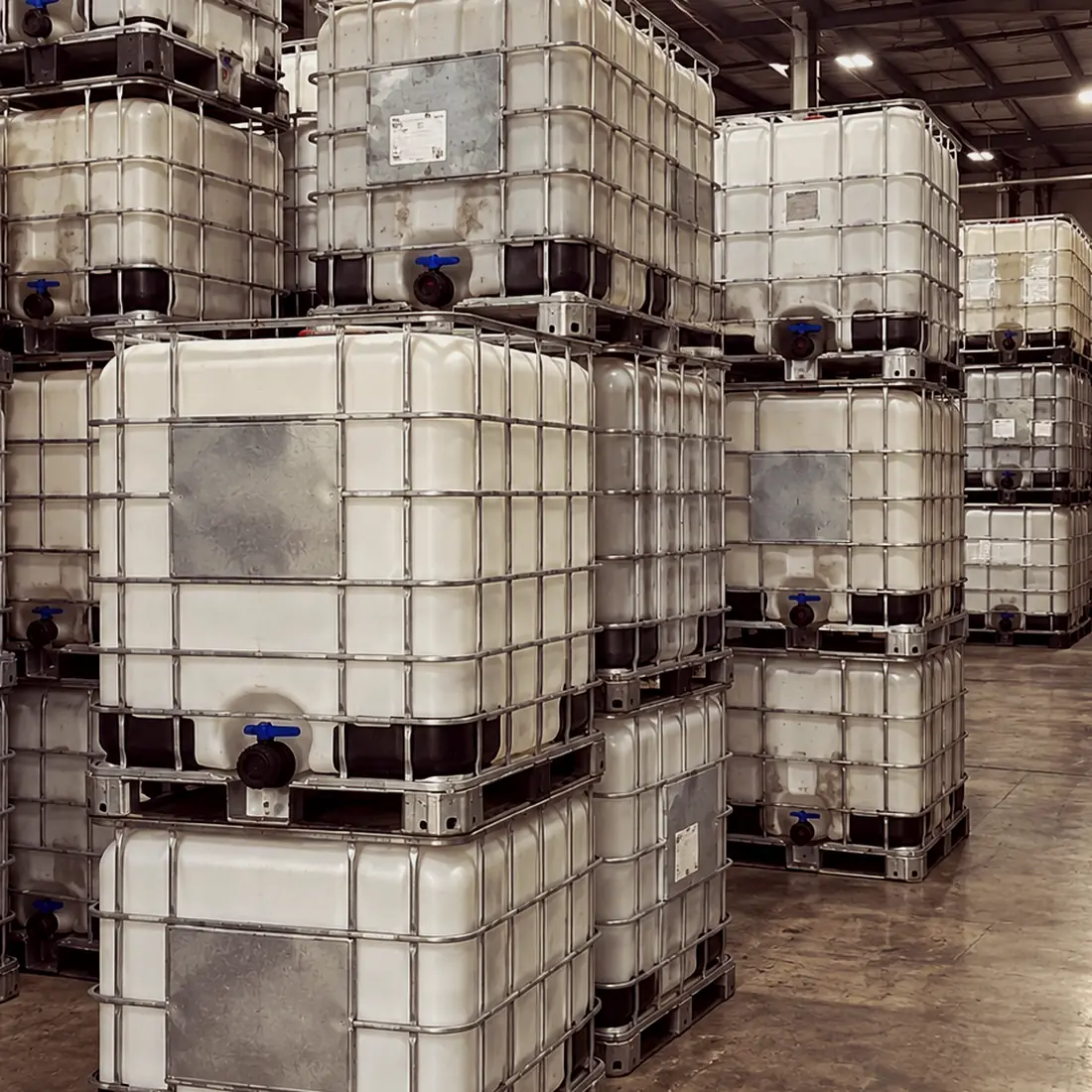
Grades, markings, dimensions and fittings — the pages you read before placing an order.
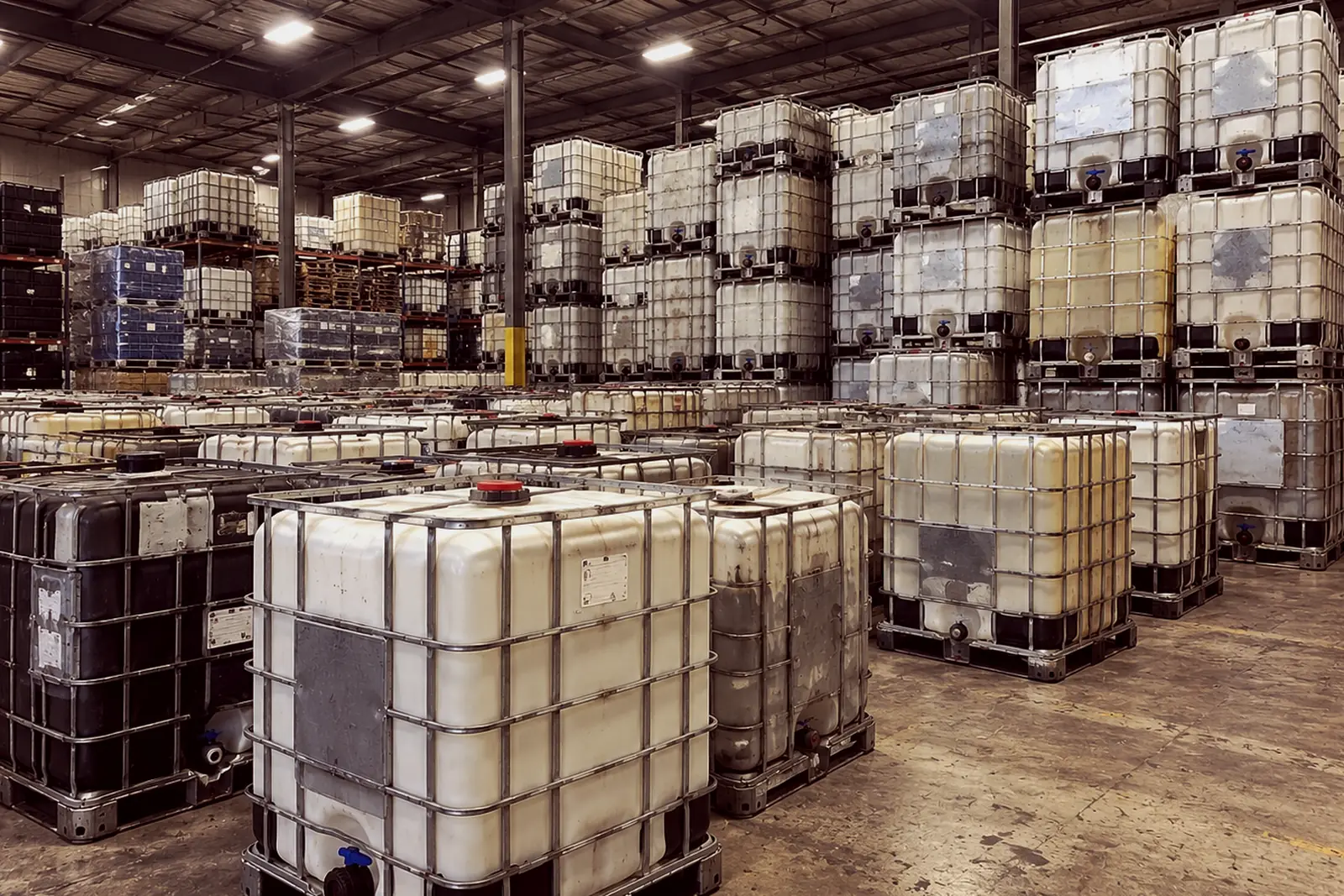
Cleaning, storage and safety — the pages you read once you already own containers.
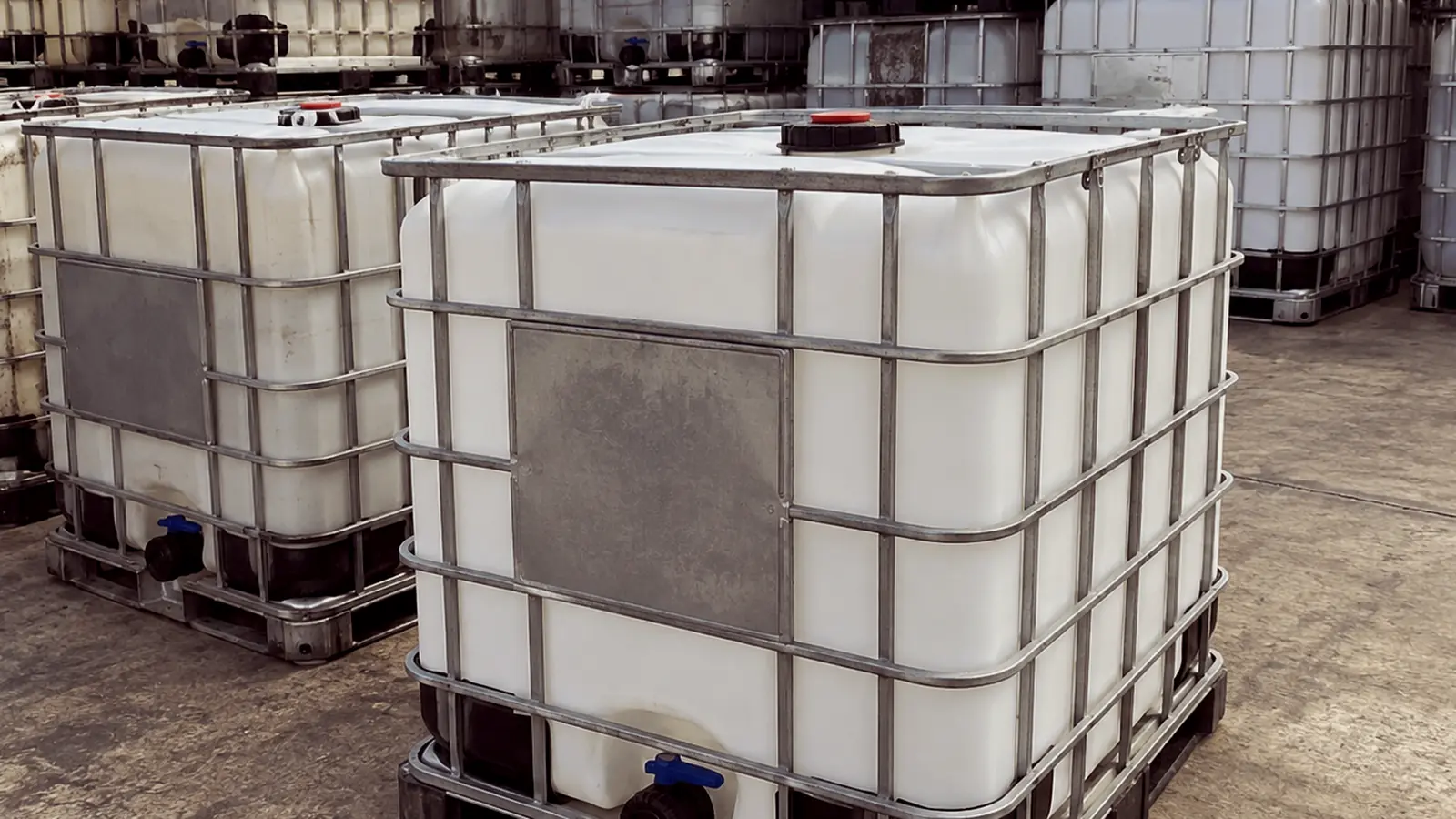
New versus used, totes versus drums — the pages written to be forwarded to procurement.


Twelve pages, several reading orders
The reference library is not a blog and not a catalog. It is a set of plain answers arranged so you can find the one you need.
Most people arrive here from a search that contains a number: 275 gallon, 330 gallon, 1,000 liter. That number is rarely the whole question. A tote for windshield washer fluid is not the same purchase as a tote for a strong acid, and a tote for a rainwater project is judged differently from one for a food plant. These pages help turn a number into a specification you can put in a quote request.
Nothing here is gated and nothing asks for an email address before it shows you a table. If a page is useful, forward it.
Ways to read the library
- Specifying for the first time. Start with the buying guide, then the sizes pages, then grades explained.
- Decoding something you already own. Go to the UN marking decoder, then the anatomy page.
- Running totes on site. Cleaning and reuse, storage and stacking, and the safety checklist.
- Comparing options. New versus used, totes versus drums, and the rainwater harvesting page.
- Checking a detail. The FAQ and the glossary are each on a single page, searchable with your browser's find function.
If a question is not answered here, it is usually because the honest answer depends on your product. Describe it in a quote request and the partner supplier that quotes can answer for your case.
| Reading order | Pages | Who it is for |
|---|---|---|
| Specify from scratch | Buying guide, sizes, grades | First-time buyer |
| Decode an existing tote | UN markings, anatomy | Site or EHS lead |
| Run totes on site | Cleaning, storage, safety | Warehouse or operations |
| Compare options | New vs used, totes vs drums | Procurement, finance |
| Check a detail | FAQ, glossary | Anyone |
Using this library
Where should I start if I have never bought an IBC tote before?
Which page tells me whether a used tote is safe for my product?
How do I read the UN marking on a tote I already own?
Are the dimensions and weights on these pages exact?
Can I print or share these guides with my team?
Still not sure what to specify?
Describe the product, the quantity and where the totes are going. We pass your request to partner suppliers in our network, and a supplier follows up with a quote.