
Totes don't die.
They get reused.
Buying, selling, washing or recycling IBC totes? Tell us what you need. We pass your request to partner suppliers in our network, and a partner supplier follows up with a quote.
Request a quote
IBC Totes is a referral service. We take quote requests from businesses across the US for buying, selling, reconditioning, recycling, pickup and delivery of IBC totes, and pass them to partner suppliers in our network, who prepare the quotes.
Used totes vary a lot. Two units that look the same on a pallet can have very different histories, and that history decides what a tote is fit to carry next. The useful questions are always the same: what was in it, how was it cleaned, and what condition are the bottle, cage and valve in.
This site explains those questions so you can ask them of any supplier. Grades describe condition and cleaning level, and when a bottle reaches the end of its life the HDPE can go to regrind and the cage to steel recycling.
One request, partner suppliers quote
Describe what you need once. We pass it to partner suppliers who can serve your area.
Buy, sell, wash or recycle
Requests for used, reconditioned and new totes, buyback of empties, washing and end-of-life recycling.
Free, no-obligation request
Sending a request costs nothing. Pricing and terms come from the partner supplier who quotes.
Ask about history
Prior contents and cleaning method matter more than appearance. Ask the supplier before you buy.

Condition is something you can see
A used tote's condition shows in a few places: staining or residue in the bottle, cracking or stress whitening in the plastic, bent or broken cage bars, the state of the valve and lid gaskets, and whether the marking plate is readable.
Photos help settle questions about condition before anything ships. When you request a quote, it is reasonable to ask the supplier for photos of the units, the prior contents and how they were cleaned.
Buy. Wash. Rebuild. Recirculate.
A tote stays in use when someone collects it, cleans it and puts it back into service. Requests for each of these steps go to partner suppliers in our network.
- 01
Sell your empties
Send a count, the prior contents and your location. A partner supplier follows up with an offer. Sell used totes - 02
Residue and compatibility
What a tote held decides how it should be cleaned and what it can safely carry next. Have the prior contents ready when you ask. - 03
Washing & reconditioning
Partner suppliers wash and grade totes. Rinsing, caustic washing and inspection are common steps. Washing - 04
Rebottled totes
A sound cage with a new HDPE bottle fitted. Rebottled totes - 05
Delivery & pickup
Pickup and delivery are available through partner suppliers, depending on your area. Freight - 06
Recycling at end of life
A bottle that cannot be reused can be ground into HDPE regrind, and the cage recycled as steel. Recycling

Cleaning is the part that decides reuse
Collecting and reselling totes is the easy part. Cleaning them properly for the residue they held is what makes a used tote fit for its next job. When you compare quotes, ask how the totes were washed and how they were inspected afterwards.
About washing and reconditioningUsed, reconditioned, rebottled and new
The main kinds of IBC totes and related containers you can request quotes for. Availability depends on partner suppliers in your area.
- P-01
Used IBC Totes
Rinsed, inspected, ready to fill
Open→ - P-02
Reconditioned Totes
Washed, inspected Grade A stock
Open→ - P-03
Rebottled Totes
New bottle, reclaimed cage
Open→ - P-04
New IBC Totes
When new is the only option
Open→ - P-05
Stainless Steel IBCs
Long-life 304/316L tanks
Open→ - P-06
Accessories & Fittings
Valves, adapters, pumps, lids
Open→ - P-07
Plastic & Steel Drums
15–55 gallon used drums
Open→
Stored, stacked and shipped
Totes are built to stack, move by forklift and travel by truck.
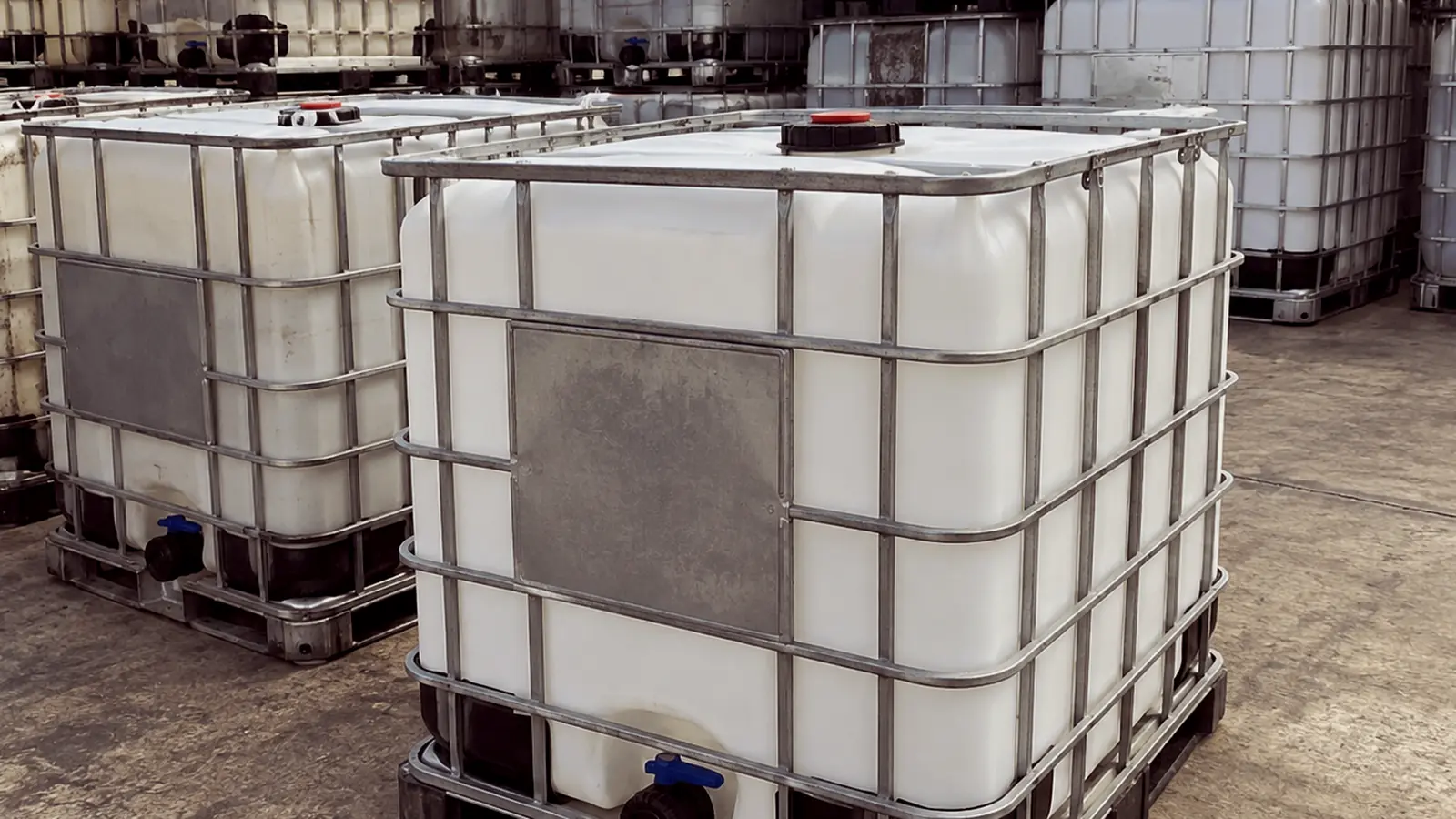
Totes stored outdoors are best kept capped. Long sun exposure ages the HDPE bottle.
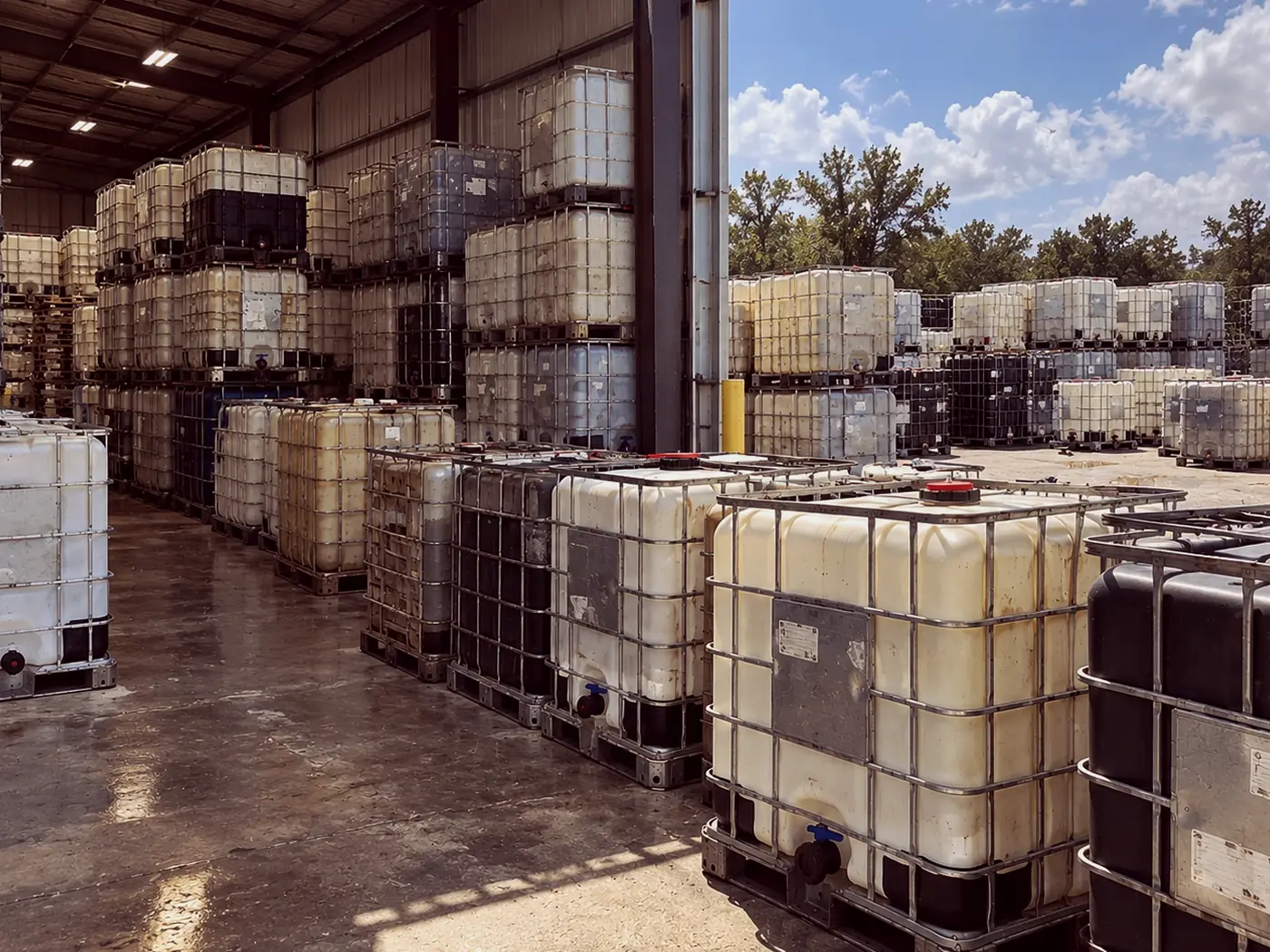
Totes ship on trailers, and how many fit depends on size, stacking and weight.
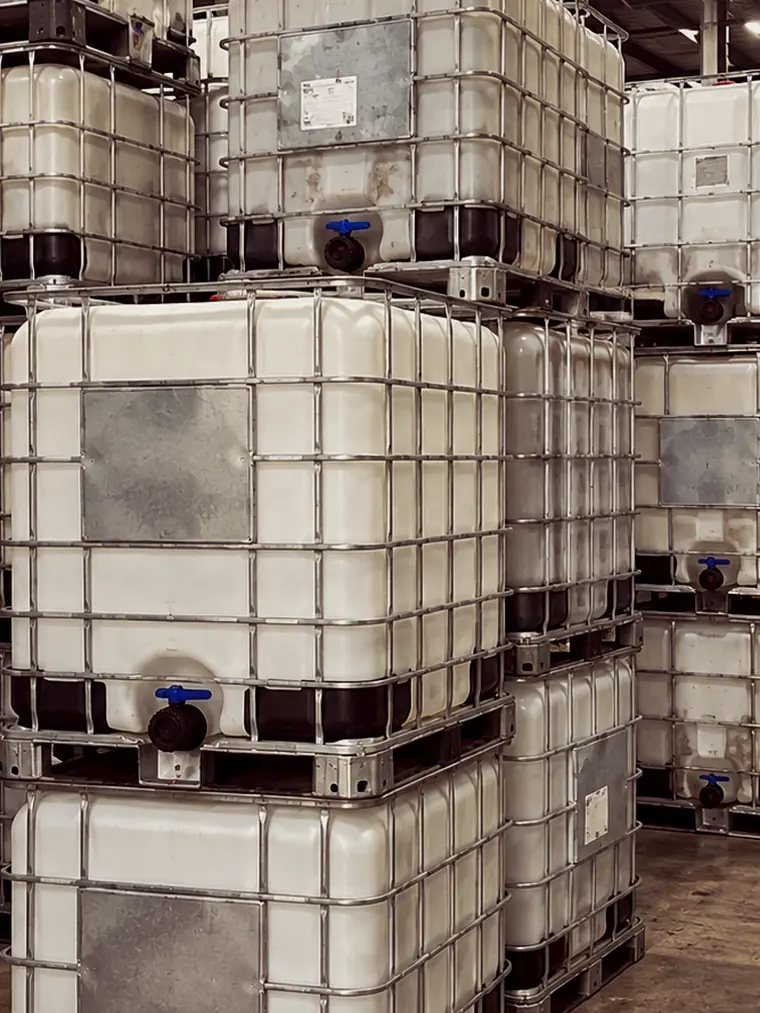
The steel cage and pallet base let totes stack. Check the stacking limits for the unit and its contents.


The common sizes
The 275 gallon tote is the most common. The 330 gallon tote shares a similar footprint and stands taller. Larger and special sizes exist too.
| Size | Capacity | Footprint (L × W) | Typical use |
|---|---|---|---|
| 275 gal | 1,040 L | 48" × 40" | General liquid storage and transport |
| 330 gal | 1,250 L | 48" × 40" or 48" × 45" | More volume on a similar footprint |
Collect. Clean. Reuse.
A tote goes round a loop of physical steps: collection, inspection, cleaning, reuse and, at the end, recycling. Each step has to happen for the loop to work.
The step reuse most often fails at is cleaning. Collection and resale are straightforward, but washing a tote properly for the residue it held takes the right equipment and method. Skipping it is how used totes get a poor reputation.
Different sectors, different definitions of 'clean'
A brewery, a water treatment plant and a fertilizer blender may all want a used tote, but not the same used tote. Prior contents and cleaning matter differently in each.
- S-01
Agriculture & crop inputs
Fertilizer, surfactants and liquid feed.
Open→ - S-02
Food & beverage
Needs documented history. Check with the supplier and current regulations.
Open→ - S-03
Chemical & industrial
Compatibility comes first. Have the SDS ready when you ask.
Open→ - S-04
Water & wastewater
Polymer, hypochlorite and coagulant storage. Valve seals must suit the chemical.
Open→ - S-05
Construction & energy
Dust control, curing compounds, DEF and site water.
Open→ - S-06
Breweries & distilleries
Product, cleaning chemistry and process water each call for a different tote.
Open→
What a careful supplier checks
The order matters. A residue check after washing tells you little; it belongs before the wash is chosen.
- Prior contents. The actual product, not just a category.
- Marking plate. Readable, with design type and dates.
- Residue check. What is left inside decides the cleaning method.
- Wash. A method matched to the residue, not one wash for everything.
- Rinse and dry. A closed, damp tote can grow biofilm.
- Bottle inspection. Cracking, stress whitening, deformation and staining.
- Cage inspection. Bent or broken bars and damaged welds.
- Valve and lid. Gaskets and seals suited to the next product, and a leak check.
Common questions
More are answered on the full FAQ, and the glossary decodes the vocabulary.
What is a used IBC tote, and is buying one safe?
How much does a used IBC tote cost?
Can I sell the empty totes at my site?
What does 'UN 31HA1/Y' on the plate mean?
Is reusing a tote better for the environment?
What happens to a tote that cannot be cleaned?
Can I get the totes I already own washed?
Do you deliver?
How do I get in touch?
Tell us the count, the size and what they held.
That is a good start for a quote, whether you are buying or selling. We pass your request to partner suppliers in our network, and a partner supplier follows up.